
AI, computer vision meet LoRaWAN with SenseCAP K1100 sensor prototype kit – CNX Software

CNX Software – Embedded Systems News
Reviews, tutorials and the latest news about embedded systems, IoT, open-source hardware, SBC's, microcontrollers, processors, and more
CNXSoft: This is another tutorial using SenseCAP K1100 sensor prototype kit translated from CNX Software Thai. This post shows how computer vision/AI vision can be combined with LoRaWAN using the Arduino-programmable Wio Terminal, a Grove camera module, and LoRa-E5 module connecting to a private LoRaWAN network using open-source tools such as Node-RED and InfluxDB.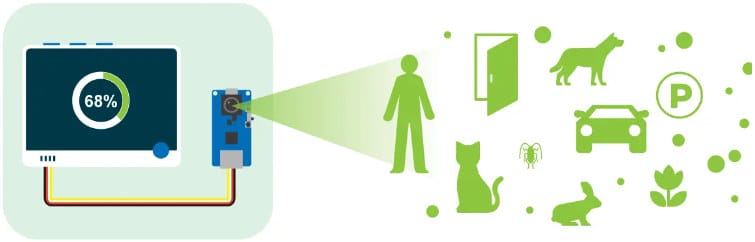
In the first part of SenseCAP K1100 review/tutorial we connected various sensors to the Wio Terminal board and transmitted the data wirelessly through the LoRa-E5 LoRaWAN module after setting the frequency band for Thailand (AS923). In the second part, we’ll connect the Grove Vision AI module part of the SenseCAP K1100 sensor prototype kit to the Wio Terminal in order to train models to capture faces and display the results from the camera on the computer. and evaluate the results of how accurate the Face detection Model is. Finally, we’ll send the data (e.g. confidence) using the LoRa-E5 module to a private LoRaWAN IoT Platform system.
In order to understand what artificial intelligence is, and how it can benefit your business and organization, we should first define a few terms.
The Grove AI Vision module comes with a small AI camera supporting TinyML (Tiny Machine Learning) algorithms. It can perform various AI functions provided by Seeed Studio such as person detection, pet detection, people counting, object recognition, etc.. or you could even generate your own model through a training tool for machine learning and take that model. It’s easy to deploy and get results in minutes. The solution does so at ultra-low power with a 2.5mW/frame camera and low-power LoRaWAN connectivity (19.5mW).
The module also comes with a microphone and a 6-axis motion sensor, so it can be used for more than just AI Vision.
We’ll need the following items for our AI vision and LoRaWAN project (items in bold are part of the SenseCAP K1100 kit):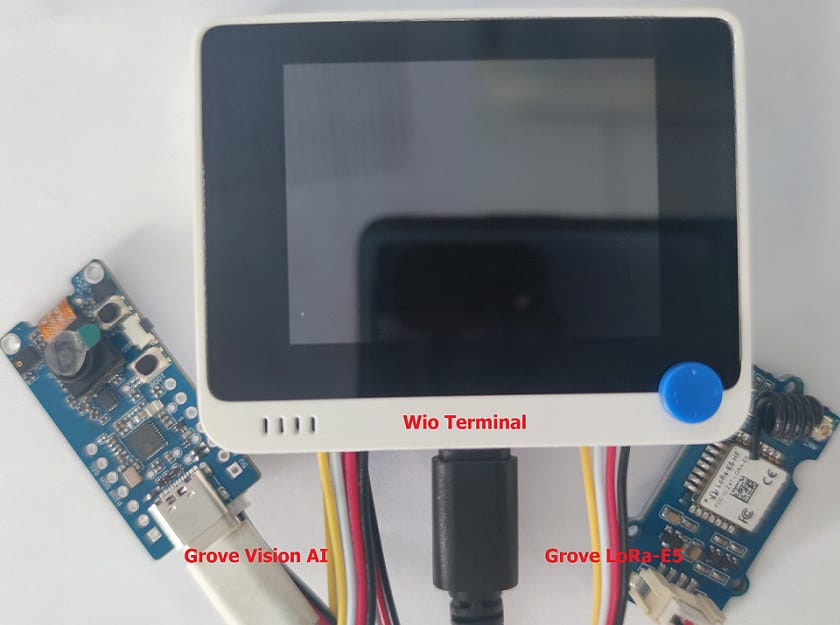
Seeed Studio provides pre-trained models that we can use to speed up our learning experience about the Vision AI camera module, including face detection and face & body detection. Let’s see how we can use those.
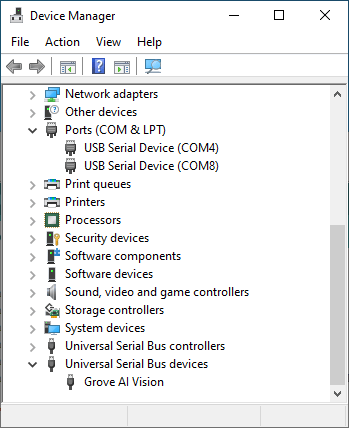
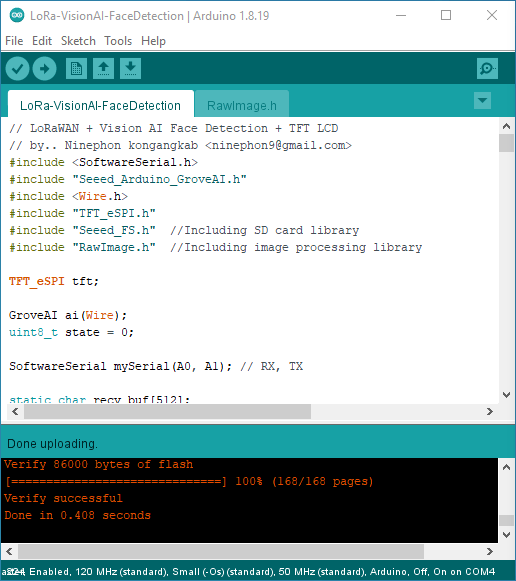
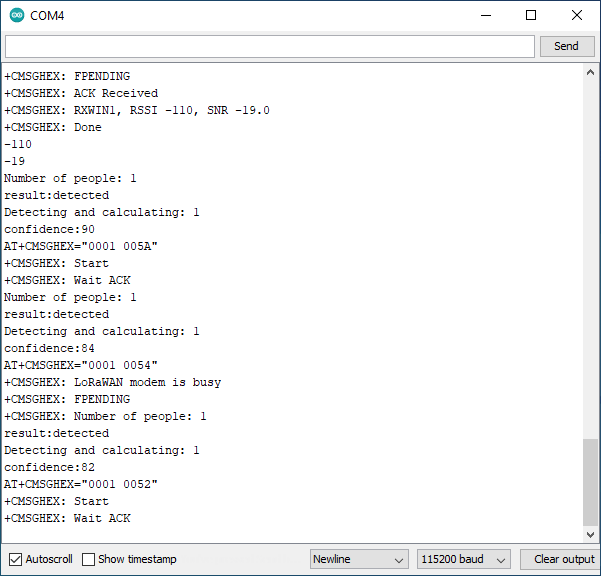
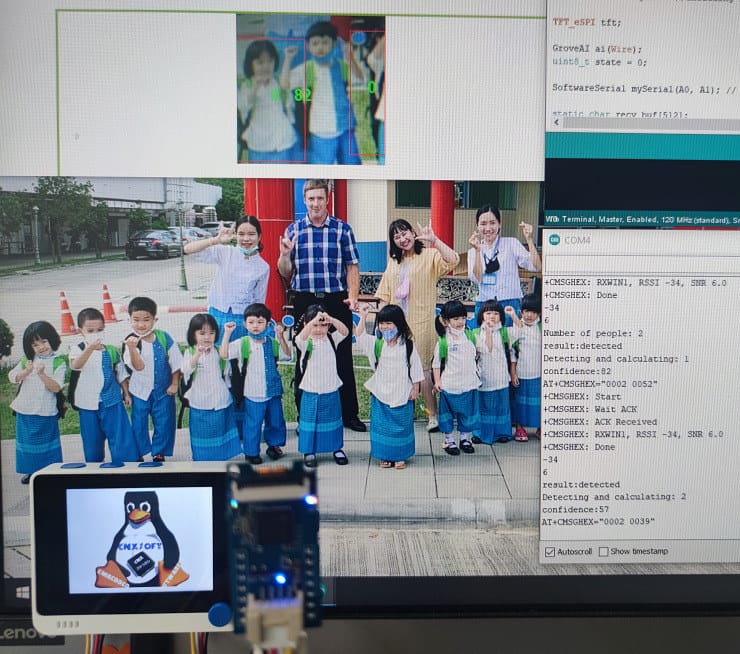
Here’s a short demo showing the Grove Vision AI module in action.
So far, we’ve only demonstrated computer vision, but we’ve yet to make use of the LoRa-E5 module. We’ll rely on the same “open-source-powered” private LoRaWAN IoT platform as in the first part of our review, except the environmental sensor is replaced with the Grove Vision AI module.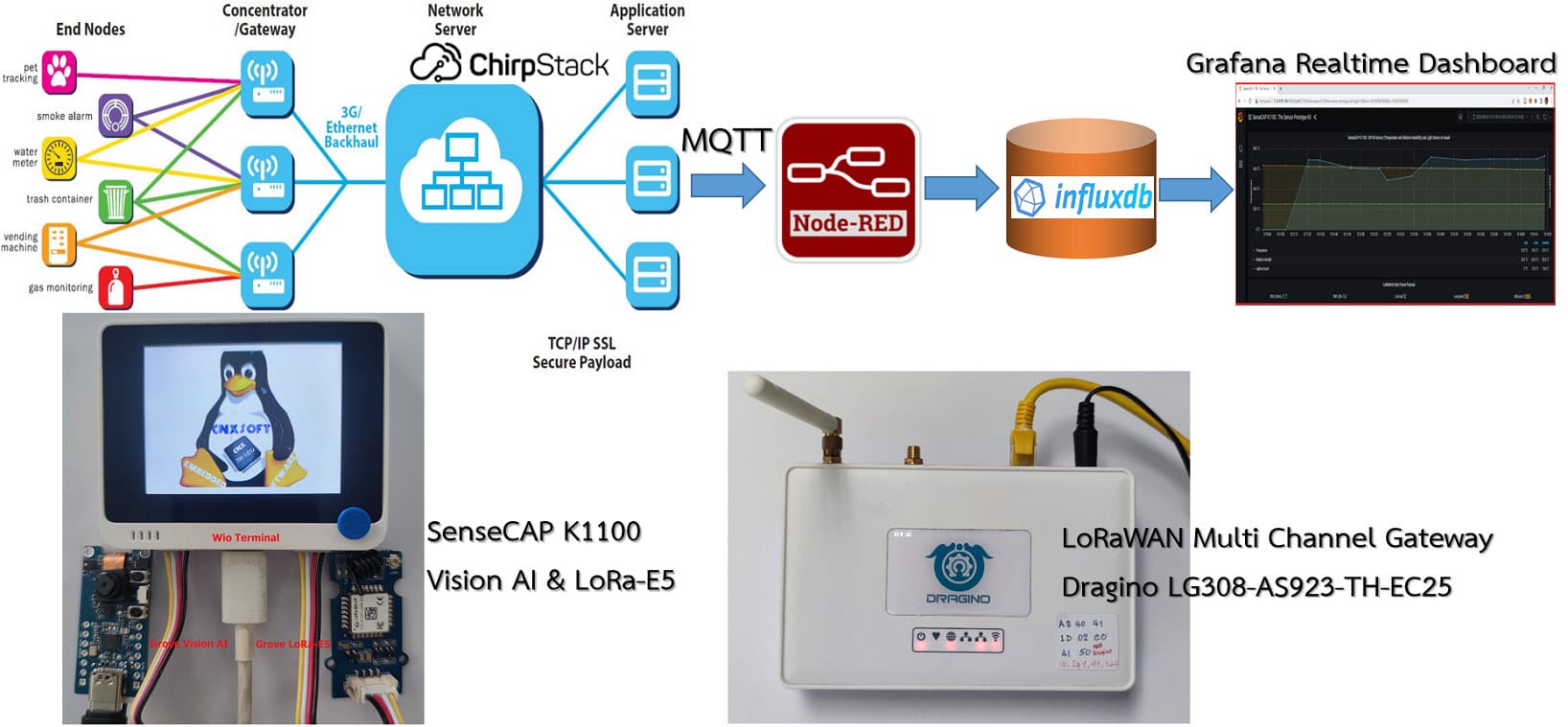
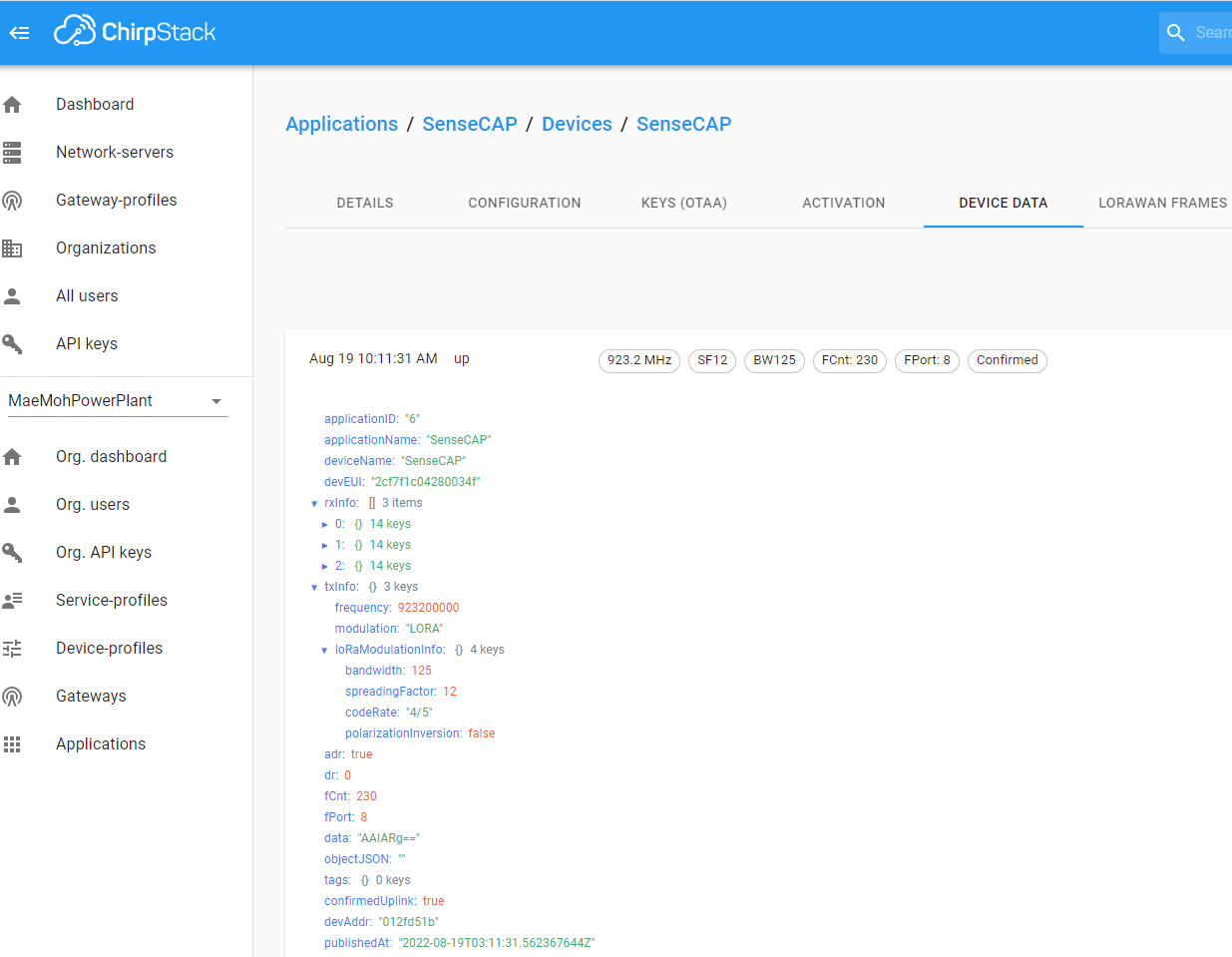
Grafana real-time dashboard allows the user to visualize the data from the InfluxDB database, this time the number of people and inference confidence.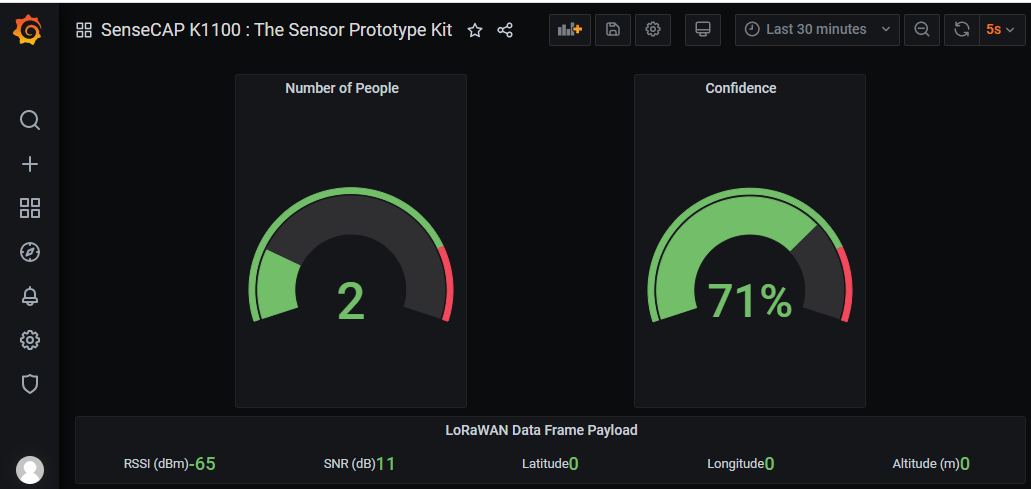
While the SenseCAP K1100 prototype sensor kit can be used to combine AI/computer vision with LoRaWAN, and it is great for education and prototyping, if you plan to deploy such a solution in the field, an industrial-grade sensor should be selected instead. It should be able to withstand the elements such as rain, heat, and dust, and be much more reliable. One example is the industrial-grade SenseCAP A1101 LoRaWAN Vision AI Sensor ($79 on Seeed Studio).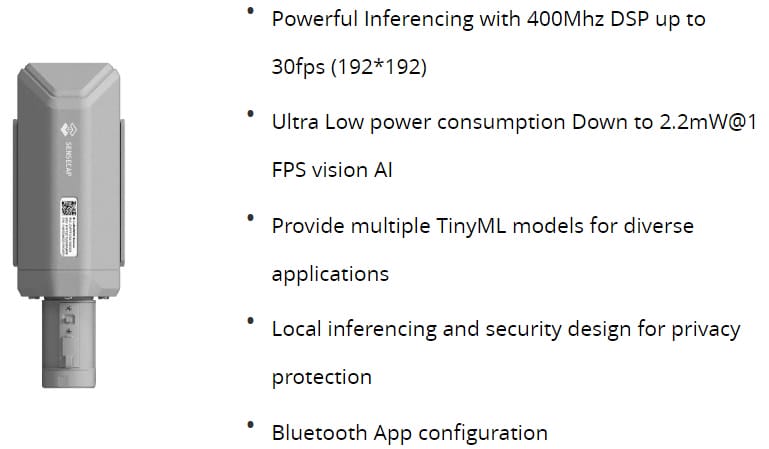
I would like to thank Seeed Studio for sending the SenseCAP K1100 sensor prototype kit for this review. It is available for $99.00 plus shipping.
Jean-Luc started CNX Software in 2010 as a part-time endeavor, before quitting his job as a software engineering manager, and starting to write daily news, and reviews full time later in 2011.
Support CNX Software! Donate via PayPal or cryptocurrencies, become a Patron on Patreon, or buy review samples
Related posts: