
Here's how AI, computer vision will change driving – EcoMotion 2022 – The Jerusalem Post

Earlier this month, the EcoMotion 2022 conference took place, where companies and experts from across the automotive technology industry gathered to showcase the latest innovations defining the sector.
From computer vision to artificial intelligence, the advancements on display paint a telling picture of the ways that we will interact with our vehicles in the pretty-near future.
Autonomous vehicles were also present at the conference, with new technologies showcased by companies such as the driving system verification platform Foretellix. The company’s platform is used by companies like Volvo, MobilEye and Amazon Web Services to verify the safety and viability of the software used to direct Autonomous Vehicles and Advanced Driver-Assistance Systems.
console.log(“catid body is “+catID);if(catID==120){document.getElementsByClassName(“divConnatix”)[0].style.display =”none”;var script = document.createElement(‘script’); script.src = ‘https://player.anyclip.com/anyclip-widget/lre-widget/prod/v1/src/lre.js’; script.setAttribute(‘pubname’,’jpostcom’); script.setAttribute(‘widgetname’,’0011r00001lcD1i_12258′); document.getElementsByClassName(‘divAnyClip’)[0].appendChild(script);}else if(catID!=69 && catID!=2){ document.getElementsByClassName(“divConnatix”)[0].style.display =”none”; var script = document.createElement(‘script’); script.src = ‘https://static.vidazoo.com/basev/vwpt.js’; script.setAttribute(‘data-widget-id’,’60fd6becf6393400049e6535′); document.getElementsByClassName(‘divVidazoo’)[0].appendChild(script); }
The company recently closed a $32m investment round, with its overall capital raised reaching $50m since it was established in 2018.
The Renault-Nissan-Mitsubishi Innovation Lab in Tel Aviv was present at the conference, looking for the latest innovations to utilize in future cars and services offered by the alliance members’ companies. The lab’s mission statement is to advance state-of-the-art mobility, with the main focus on vision sensors, cybersecurity, EV and data & AI.
One company that might have caught its eye is Cipia, which uses on-board sensors to watch drivers and detect when their focus has shifted from the road, utilizing eye- and head-tracking sensors coupled with artificial intelligence software.
The company demonstrated instances of a driver showing signs of becoming drowsy or distracted, which were quickly recognized by Cipia’s AI system and flagged appropriately. If put to proper use, this technology could potentially save lives, preventing accidents caused by distracted drivers behind the wheel.
Not all of the technology showcased is intended expressly for drivers — autonomous or otherwise. Some of it is meant to help users assess the wellness and maintenance of their vehicles; one such technology is QUESTAR’s vehicle health management system, which converts accumulated data from all of a vehicle’s systems into maintenance insights, which are then processed by an AI engine which accurately diagnoses the faults in the vehicle and alerts users.
“The solution we offer is one of a kind and brings with it a real line for change in vehicle maintenance and savings among institutional and private customers,” said Erez Lorber, CEO of QUESTAR. “The combination of AI and advanced telemetry provides a dual test of both technologies simultaneously, with a particularly high level of accuracy that allows you to know at any given moment about the condition of your vehicle and address it only when required.”
“At the same time, we are working closely with a number of car manufacturers to implement the technology in new vehicles during the production phase, so that it will be installed on the car’s computer. This will allow both the manufacturer and the customer to regularly monitor the health of the vehicle,” Lorber added.
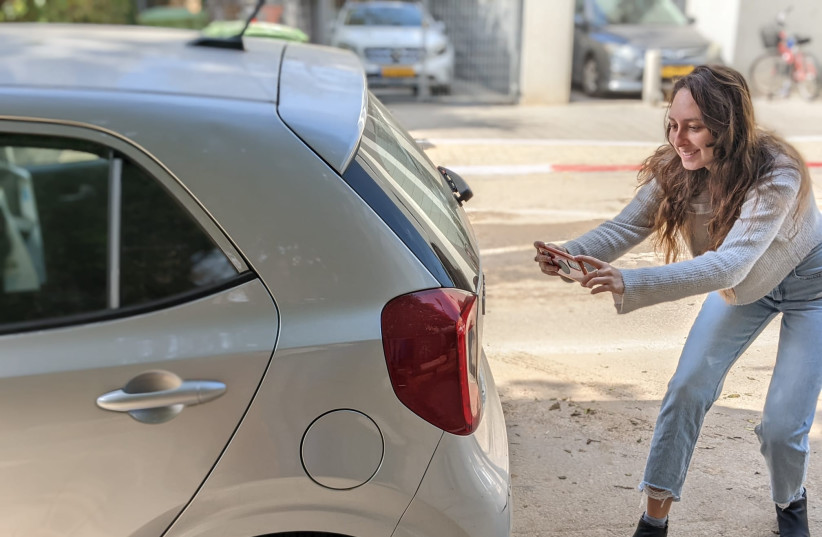
Another notable company that utilizes AI to monitor vehicle wellness is Ravin.AI, which uses computer vision technology to detect and monitor a vehicle’s condition by leveraging mobile phone cameras and standard CCTV footage to make efficient and accurate damage assessment reports. The technology enables users to take a 360° scan of any make or model of vehicle, and the AI algorithm can then find and flag if and where there’s damage, its severity, and even assess how much it will cost to fix in a given location.
Ravin’s technology is a game-changer for car dealerships and rental facilities that require frequent, accurate assessment of the damage. The platform is able to detect 25% more damage to vehicles than human inspectors alone, and is in use worldwide, with customers such as Toyota Israel and Lexus.
“Until now inspections have typically happened with a piece of paper and a pen – you walk around the car, you look really thoroughly and you draw circles on a little sketch of the car and fill out this form. It’s very manual, which is very weird for this time in history,” explained Ravin’s product manager Omer Perry. “There’s a lot of need to make things easier and more efficient. [With Ravin], these inspectors can do a scan that would maybe take 20 or 30 minutes in the past. Our inspection could take 30 seconds, a minute, 15 minutes — depending on how extensive you want this inspection to be. So it cuts down the time, it’s more accurate, it’s more consistent.”
In conclusion, she noted in one sentence one of the most valuable aspects of AI in everyday use cases such as this: “AI doesn’t have bad days and good days, like people do.”