
Upgrading Your Computer to Quantum – SciTechDaily

By
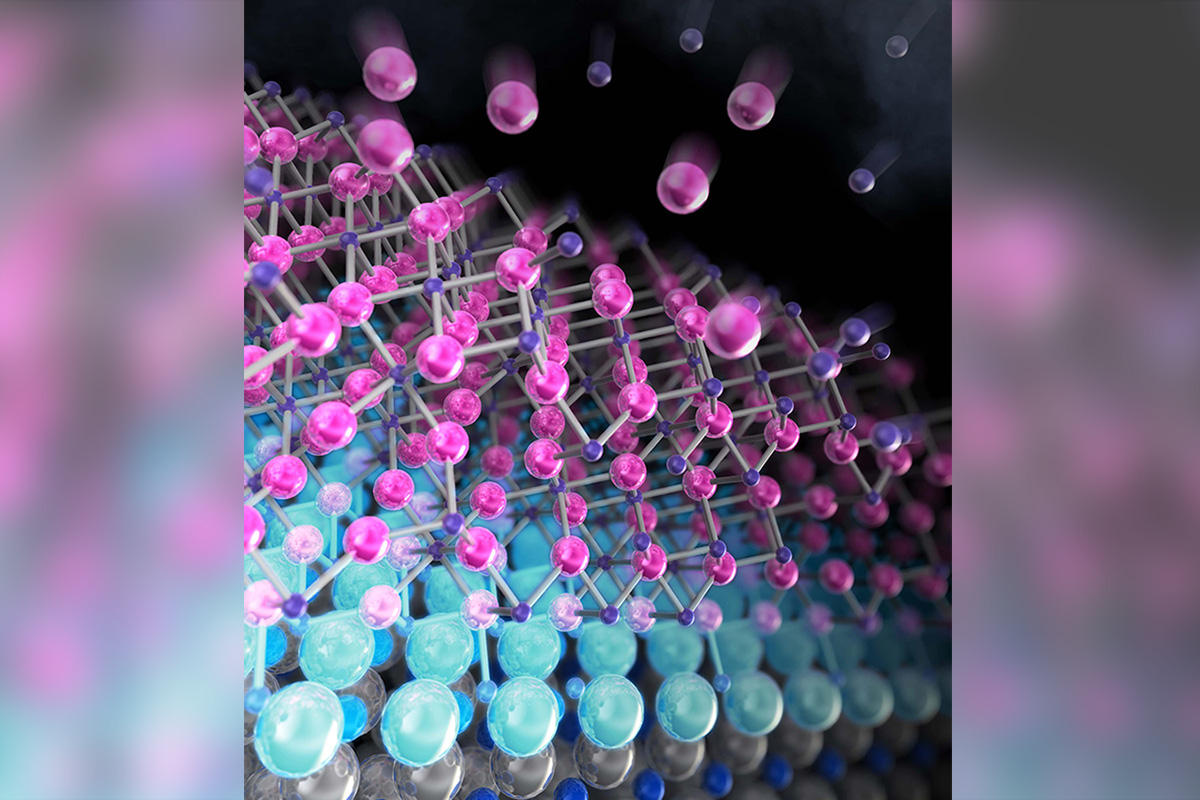
Nanoscale Layer of a Superconducting Material on Top of a Nitride Semiconductor Substrate

Researchers at The University of Tokyo grow a nanoscale layer of a superconducting material on top of a nitride-semiconductor substrate, which may help facilitate the integration of quantum qubits with existing microelectronics. Credit: Institute of Industrial Science, The University of Tokyo

Computers that can use quantum mechanics’ “spooky” properties to solve problems quicker than existing technology may seem appealing, but they must first overcome a major obstacle. Scientists from Japan may have discovered the solution by demonstrating how a superconducting material, niobium nitride, can be added as a flat, crystalline layer to a nitride-semiconductor substrate. This technique could make it simple to manufacture quantum qubits that can be used with conventional computer devices. 

Conventional silicon microprocessor manufacturing techniques have grown over decades and are continually being refined and enhanced. On the other hand, the majority of

Recently, a group of scientists from The University of Tokyo’s Institute of Industrial Science demonstrated how thin films of niobium nitride (NbNx) can grow directly on top of an aluminum nitride (AlN) layer. Niobium nitride can become superconducting at temperatures colder than 16 degrees absolute zero

Absolute zero is the theoretical lowest temperature on the thermodynamic temperature scale. At this temperature, all atoms of an object are at rest and the object does not emit or absorb energy. The internationally agreed-upon value for this temperature is −273.15 °C (−459.67 °F; 0.00 K).

” data-gt-translate-attributes='[{“attribute”:”data-cmtooltip”, “format”:”html”}]’>absolute zero. Because of this, it can be utilized to create a superconducting qubit when  arranged in a structure called a Josephson junction.

The scientists investigated the impact of temperature on the crystal structures and electrical properties of NbNx thin films grown on AlN template substrates. They showed that the spacing of atoms in the two materials was compatible enough to produce flat layers.

“We found that because of the small lattice mismatch between aluminum nitride and niobium nitride, a highly crystalline layer could grow at the interface,” says first and corresponding author Atsushi Kobayashi.

The crystallinity of the NbNx was characterized with X-ray diffraction, and the surface topology was captured using atomic force microscopy. In addition, the chemical composition was checked using X-ray photoelectron spectroscopy. The team showed how the arrangement of atoms, nitrogen content, and electrical conductivity all depended on the growth conditions, especially the temperature.

“The structural similarity between the two materials facilitates the integration of superconductors into semiconductor optoelectronic devices,” says Atsushi Kobayashi.

Moreover, the sharply defined interface between the AlN substrate, which has a wide bandgap, and NbNx, which is a superconductor, is essential for future quantum devices, such as Josephson junctions. Superconducting layers that are only a few nanometers thick and have high crystallinity can be used as detectors of single photons or electrons.

Reference: “Crystal-Phase Controlled Epitaxial Growth of NbNx Superconductors on Wide-Bandgap AlN Semiconductors” by Atsushi Kobayashi, Shunya Kihira, Takahito Takeda, Masaki Kobayashi, Takayuki Harada, Kohei Ueno and Hiroshi Fujioka, 21 September 2022, Advanced Materials Interfaces.
DOI: 10.1002/admi.202201244

Researchers at The University of Tokyo grow a nanoscale layer of a superconducting material on top of a nitride-semiconductor substrate, which may help facilitate the integration of quantum qubits with existing microelectronics. Credit: Institute of Industrial Science, The University of Tokyo
Computers that can use quantum mechanics’ “spooky” properties to solve problems quicker than existing technology may seem appealing, but they must first overcome a major obstacle. Scientists from Japan may have discovered the solution by demonstrating how a superconducting material, niobium nitride, can be added as a flat, crystalline layer to a nitride-semiconductor substrate. This technique could make it simple to manufacture quantum qubits that can be used with conventional computer devices. 
Conventional silicon microprocessor manufacturing techniques have grown over decades and are continually being refined and enhanced. On the other hand, the majority of Celsius

The Celsius scale, also known as the centigrade scale, is a temperature scale named after the Swedish astronomer Anders Celsius. In the Celsius scale, 0 °C is the freezing point of water and 100 °C is the boiling point of water at 1 atm pressure.

” data-gt-translate-attributes='[{“attribute”:”data-cmtooltip”, “format”:”html”}]’>Celsius above

The scientists investigated the impact of temperature on the crystal structures and electrical properties of NbNx thin films grown on AlN template substrates. They showed that the spacing of atoms in the two materials was compatible enough to produce flat layers.
“We found that because of the small lattice mismatch between aluminum nitride and niobium nitride, a highly crystalline layer could grow at the interface,” says first and corresponding author Atsushi Kobayashi.
The crystallinity of the NbNx was characterized with X-ray diffraction, and the surface topology was captured using atomic force microscopy. In addition, the chemical composition was checked using X-ray photoelectron spectroscopy. The team showed how the arrangement of atoms, nitrogen content, and electrical conductivity all depended on the growth conditions, especially the temperature.
“The structural similarity between the two materials facilitates the integration of superconductors into semiconductor optoelectronic devices,” says Atsushi Kobayashi.
Moreover, the sharply defined interface between the AlN substrate, which has a wide bandgap, and NbNx, which is a superconductor, is essential for future quantum devices, such as Josephson junctions. Superconducting layers that are only a few nanometers thick and have high crystallinity can be used as detectors of single photons or electrons.
Reference: “Crystal-Phase Controlled Epitaxial Growth of NbNx Superconductors on Wide-Bandgap AlN Semiconductors” by Atsushi Kobayashi, Shunya Kihira, Takahito Takeda, Masaki Kobayashi, Takayuki Harada, Kohei Ueno and Hiroshi Fujioka, 21 September 2022, Advanced Materials Interfaces.
DOI: 10.1002/admi.202201244
Technology

Scientists Create Advanced, More Powerful Superconducting Magnet for Next Generation Light Sources

Technology

Creating the Heart of a Quantum Computer: Developing Qubits

Technology

Ultrathin Materials Lead to Big Advance in Quantum Computing

Technology

Connecting the Dots Between Material Properties and Superconducting Qubit Performance

Technology

Clever Wiring Architecture Enables Bigger and Better Quantum Computers

Technology

Quantum Future: Developing the Next Generation of Quantum Algorithms and Materials

Technology

Quantum Leap Challenge: UC Berkeley to Lead $25 Million Quantum Computing Center

Technology

New $115 Million Quantum Systems Accelerator to Pioneer Quantum Technologies for Discoveries That Benefit the World

Email address is optional. If provided, your email will not be published or shared.


SciTechDaily: Home of the best science and technology news since 1998. Keep up with the latest scitech news via email or social media.
  > Subscribe Free to Email Digest

December 12, 2022

NASA’s Lunar Flashlight Has Launched – Follow the Mission to the Moon in Real Time

NASA’s Eyes on the Solar System web-based visualization tool lets you “see” the SmallSat as it journeys to the Moon and seeks out water ice…

Read More

NASA’s Eyes on the Solar System web-based visualization tool lets you “see” the SmallSat as it journeys to the Moon and seeks out water ice…
December 12, 2022

Landmark Study: Dinosaurs Were in Their Prime When Asteroid Hit Earth

December 12, 2022

One Million Times Faster Than Current Technology: New Optical Computing Approach Offers Ultrafast Processing

December 12, 2022

Shocking Study Finds Severe COVID-19 Linked With Molecular Signatures of Brain Aging

December 12, 2022

Flipping the Switch: New Revelations on Genetic Changes That Turn “On” Cancer Genes

December 12, 2022

Viking Knots Linked With Quantum Vortices – A Vortex Structure That Is Impervious to Decay

December 12, 2022

Splashdown! NASA’s Orion Successfully Returns to Earth After Historic Moon Mission

December 11, 2022

“Hell Planet” – How This Super-Earth Got So Scorchingly Hot

Copyright © 1998 – 2022 SciTechDaily. All Rights Reserved.

source

Related Articles